This article contains affiliate links to eBay and Amazon. As an eBay Partner and an Amazon Associate, we may earn from qualifying purchases at no extra cost to you.
- A worn belt is cheap to fix; a damaged bearing, motor or platter is not, so look at those first.
- Ask for video at 33 and 45 showing steady rotation and a stylus-free spin-down.
- Platter wobble, rubbing or noise from the center is a bearing question for the seller.
- Check that the sub-platter, platter, belt and mat are all included and match the listing.
- Mains and motor repairs belong with a qualified technician, so price any doubt as a risk.
Why belt-drive decks are checked differently
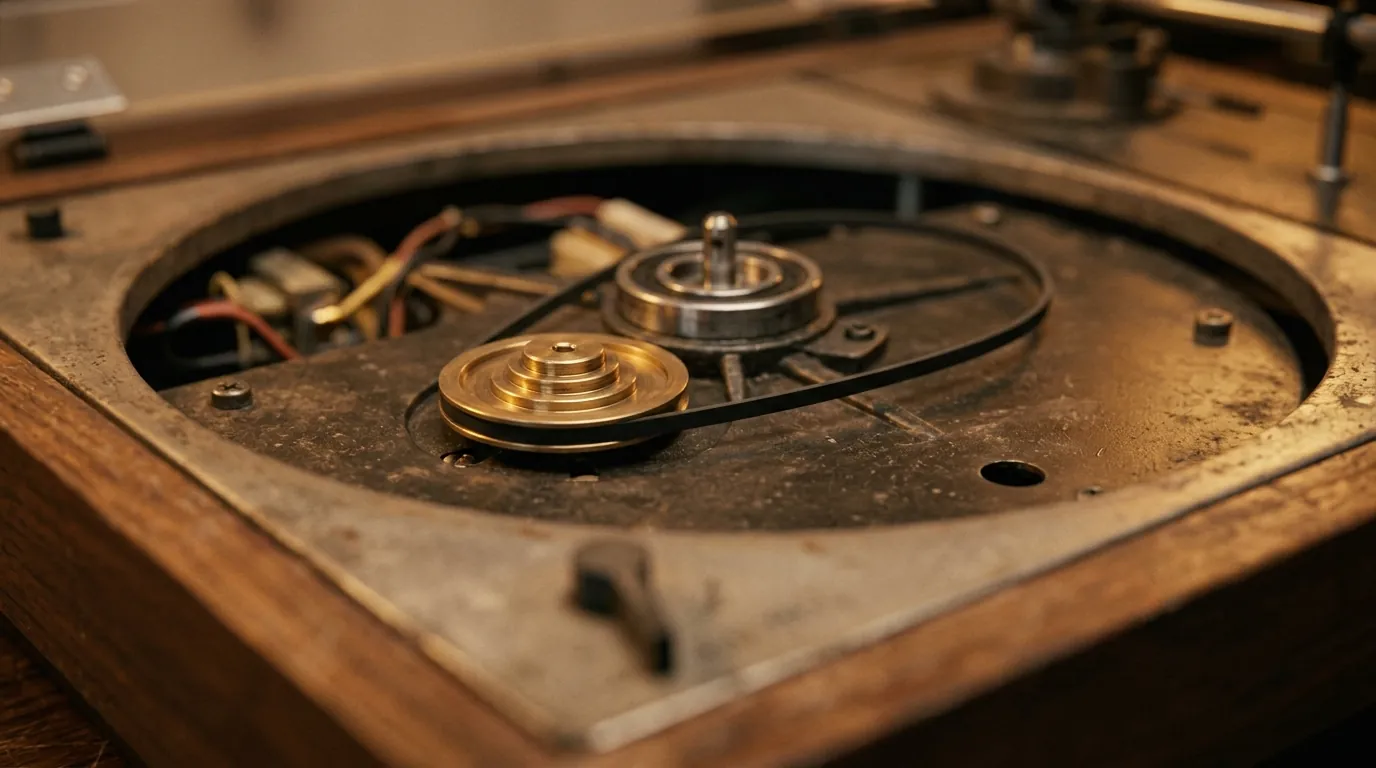
In a belt-drive turntable the motor sits off to one side and a rubber belt turns the platter. That design is described in our belt drive vs direct drive guide. For a buyer, it means the failure points are different from a DJ deck: the belt is a consumable, the bearing carries the platter, and the motor is mounted separately and can transmit noise if its mounting has aged.
The good news is that the part most likely to be worn, the belt, is also the easiest to replace. The bad news is that sellers often mention "needs a new belt" as a throwaway, and that can hide a problem somewhere that is harder to fix. Use the checks below to separate a minor job from a deal-breaker.
The mechanical checks, part by part
The platter bearing
The platter spins on a central bearing, and it is the part you cannot see in a listing photo. Ask the seller to lift the platter, show the spindle and the bearing well, and confirm there is no visible rust, scoring or dirt. Then ask for a short video of the platter spinning by hand with the belt off or by itself, and of the deck running at normal speed.
- Rubbing or grinding noise from the center when the platter turns.
- Side-to-side wobble when you look at the platter edge from the front.
- Visible play if the platter can be moved when lifted slightly and pressed.
- Dried or missing lubricant described by the seller. Do not oil it yourself without the manual's guidance.
A bearing that is dirty or dry is often a maintenance job. A bearing that is scored, bent or loose is a repair job, and a good reason to walk away or lower your offer significantly.
The motor and pulley
The motor is usually a separate unit bolted into the plinth, with a small pulley on its shaft. Ask for photos of the pulley and of the area around it. Look for a pulley that is cracked, chipped or rubbing, and ask whether the motor hums, vibrates or gets very hot after playing. Some belt-drive decks have a suspended motor or a motor mounted in rubber, and perished rubber there can make rumble or noise.
Speed change on many belt-drive decks works by moving the belt to a different step on the pulley by hand, while others change speed electronically. Check how the seller says your target deck changes speed, and ask them to show both speeds. If a deck is electronic and fails to change speed, that is not a belt fix.
The platter and sub-platter
Many belt-drive decks use a sub-platter, a smaller hub the belt actually runs on, with a heavier platter placed on top. Others run the belt around the platter rim. Ask the seller to confirm which design it has and that every piece is present. A missing sub-platter, a bent platter or the wrong replacement platter will change the speed behavior and may cost more to correct than the deck is worth.
Look for flat, even platter faces, no dents or warping, and a mat that matches the original. Our turntable mat guide explains what to look for in a replacement.
The belt
Ask whether the belt is original and when it was last replaced. A belt that has stretched, hardened or cracked can cause slow or wavering speed. If the seller says it needs a belt, treat it as a normal part of the price, and see our belt replacement guide for how to match one to the deck. Keep in mind that a replacement is only a fix if the rest of the drive is sound, so do not let a cheap belt distract from a doubtful bearing.
Search belt-drive turntables on eBayCompare listings that show the bearing, the sub-platter and the belt clearly, and read the seller's return policy.eBay affiliate link
Search eBaySpeed, hum and tonearm
Ask for a video that shows the platter at both speeds and the stylus moving across a record, and ask the seller to say what they measured. A strobe disc or a speed app can give a rough indication, but treat a seller's phone-app result as an approximate check, not a certified measurement. If you can run your own test after delivery, a printed strobe disc is cheap.
Search turntable strobe discsA strobe disc is a printed disc you read under a light, and it must suit your mains frequency and platter size.Amazon affiliate link
Search AmazonAlso ask about the tonearm: smooth movement, no side play, a cueing lever that works, and an intact headshell and counterweight. Suspended-subchassis decks add their own checks, which our Thorens TD-160 guide walks through. Setting up the arm afterwards is covered in our tracking force guide.
What to ask the seller
- Does the platter spin smoothly and quietly, and is it level?
- Is the belt original, and is a spare included?
- Are the sub-platter, platter, mat and cueing lever all present and working?
- Can you show both speeds in a video and the pulley close up?
- Does the motor run quietly and stay cool, and has the deck ever been serviced?
The seller question builder can assemble these into a message. Then check the return window before you pay; a seller who allows returns on a mechanical item is saying something about their confidence.
Count the cost of what is missing
Before you bid, list what the deck needs to run properly: a belt, a stylus, a mat, a dust cover, perhaps a counterweight or new feet. Each is a small purchase, but together they can change which listing is the better value. A complete deck with an old belt often beats a cheaper one missing the platter mat, sub-platter or cover. Add shipping and an allowance for a stylus, then compare the total, not the headline, and check the seller's return terms.
When to pass
Pass on a deck with a loose or rubbing bearing, a bent platter, a cracked pulley or a seller who cannot or will not show it running. Buy a deck that spins quietly, holds speed and has all its parts, even if the belt is old. A belt costs little to replace; a bearing or motor problem can cost far more than the deck.
Sources and verification
This guide describes common inspection points for belt-drive decks. No bearing, belt or speed specification is stated; check the maker's service manual. Check your model's manual or a maker's spec sheet for lubricant, tolerances and service steps.
- RecordPlayers.co: Belt drive vs direct drive (how belt drive works and why belts wear)
- RecordPlayers.co: Turntable belt replacement (matching a belt to the deck)