This article contains affiliate links to eBay and Amazon. As an eBay Partner and an Amazon Associate, we may earn from qualifying purchases at no extra cost to you.
- Only belt-drive decks use a belt; direct-drive and idler decks do not.
- Choose the belt by exact deck model, using the manual or the maker's parts list.
- Use the old belt as a clue only, since stretched belts measure too long.
- After fitting, check speed before blaming other parts.
- Do not open the plinth; leave electrical work to the manual and a qualified technician.
First, check that your deck uses a belt
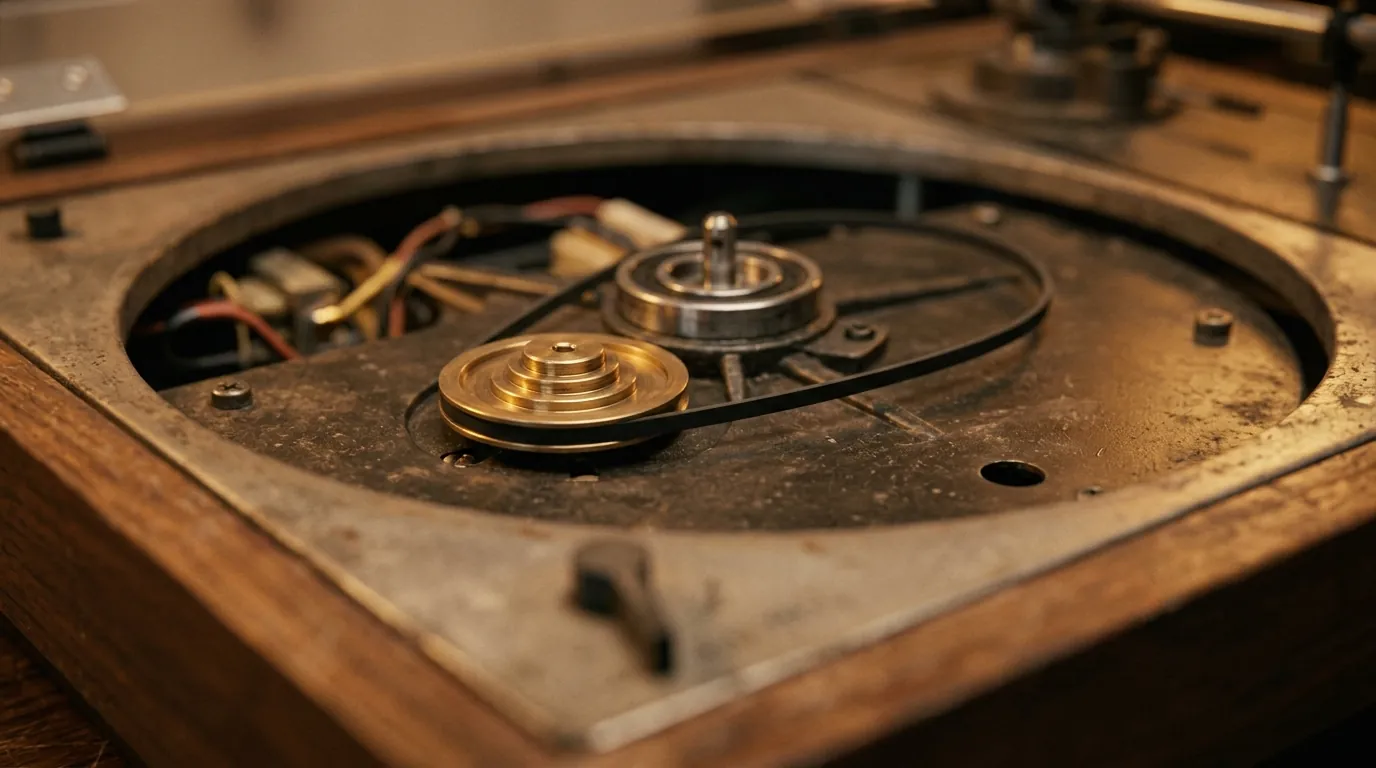
Only belt-drive decks need one. Direct-drive decks turn the platter directly from the motor, and idler-wheel decks use a rubber-rimmed wheel instead. If you are not sure which you have, our belt drive vs direct drive guide explains how to tell. On a belt-drive deck, a thin rubber loop runs from the motor pulley to the platter or a sub-platter beneath it, and some decks change speed by moving the belt to a different step on the pulley.
Signs the belt is the problem
A tired belt usually shows up as speed that dips or wavers, or sound that wanders. House of Marley's guide to replacing a belt lists speed dips, visible cracks or stretching and inconsistent sound as the signs of a failing belt. You can also see it: a belt that looks cracked, shiny, loose or sticky is ready to be replaced. Rule out other causes before you buy anything. A dirty platter edge or a platter that does not sit properly can mimic a belt problem.
If you have just bought a used deck, this is one of the first parts to suspect. Our first-hour checks include a look at the belt.
Identify the deck first, the belt second
The right belt is chosen by deck model, not by looks. Work in this order:
- Find the exact model. Look at the label on the underside or back, or at the front of the plinth. Note any revision or version letters.
- Read the manual or parts list. A manual usually names the belt or shows it in a parts diagram. The maker's website may list the part.
- Confirm the belt type. Belts differ in length, width and cross-section, and some decks use a particular type. Do not assume a loop that looks similar will behave the same.
- Check which surface it runs on. Some belts go around the platter rim, others around a sub-platter. A listing for a different design will not work.
If you buy a used deck, ask the seller whether the belt is original and whether a spare is included. See our used Thorens TD-160 guide for an example of a belt-drive deck where belt and suspension checks go together.
Measuring the old belt
If the manual does not name the belt, the old belt is a reference, with a catch. House of Marley's guide advises keeping the old belt to measure the new one, and a belt that is too loose will not drive the platter properly while one that is too tight can strain the motor. But an old belt stretches over time, so a measurement taken from a worn loop may be too long. Treat a measurement as a way to narrow the search, then confirm against the model information in the manual or from a parts seller who lists the deck by name.
When the belt has already snapped or gone missing, the deck model is your only reliable guide. Ask the seller of a replacement belt what deck it is meant for.
Where to buy a belt
Three routes work, and the best depends on the deck:
| Route | Good for | Watch for |
|---|---|---|
| The maker or an authorized parts dealer | Current models and parts they still support | Stock can be limited for older models |
| New replacement belts from accessory sellers | Common modern decks | Listings that do not name your model |
| eBay for vintage and new-old-stock belts | Older decks whose original belts are no longer made | Old rubber that has aged, and listings that do not name the model |
Search belts on eBayAdd your exact deck model to the search for vintage and new-old-stock belts.eBay affiliate link
Search eBaySearch new replacement beltsAdd your exact deck model to the search and read the listing for the compatible models.Amazon affiliate link
Search AmazonFitting the new belt
The steps follow the manual for your deck, which may differ. As a general outline from the House of Marley guide:
- Switch the deck off (and, as a precaution, unplug it) and lift off the platter.
- Remove the old belt but keep it for comparison.
- Place the new belt around the platter's ridge, then spin the platter a few times so it settles.
- Thread the belt onto the motor pulley or spindle and spin again to check it moves smoothly with proper tension.
- Reseat the platter, power on and test.
Handle the belt gently so it does not overstretch, and keep belt and platter clean. After fitting, check the speed. A strobe disc or a speed-testing method confirms it, and if the speed is still wrong, look at other causes before buying another belt.
Sources and verification
The belt-fitting outline and the signs of a failing belt come from the maker's guide below. Belt dimensions and compatibility are not quoted anywhere here, because they differ by model. Check your own manual or the maker's spec sheet.
- House of Marley: How to replace a turntable belt (steps; too-loose and too-tight belts; signs of a failing belt; check the manufacturer's instructions)
- RecordPlayers.co: Belt drive vs direct drive (drive types, why belts wear)
No model-specific belt details are given here. The guide is general, and the manual for your deck overrides it.