This article contains eBay affiliate links. If you buy through them, we may earn a commission at no extra cost to you.
- Photograph the box, packing and deck before you move anything.
- Compare contents with the saved listing and check the arm, platter, stylus and belt by hand first.
- Do not plug in a damaged cord or a deck with a supply you cannot confirm; use the manual and a qualified technician.
- Play a record you do not treasure and listen for speed, both channels, noise and tracking.
- Open any claim through eBay promptly, keeping the standard 30-day and 3-day windows in mind.
Why the first hour matters
With a used turntable bought on eBay, what you do in the first hour decides how easy any claim will be. eBay's Money Back Guarantee generally covers an item that arrives broken, damaged or faulty, or that is not as described. The request is due 30 calendar days after the estimated or actual delivery date or within the seller's stated returns window, whichever is longer. A deck sold as not working or for parts with no returns offered has a 3 calendar day limit instead.
Those are the deadlines. But evidence disappears fast. Packing gets thrown away, a loose part gets lost, and "it was like that when it arrived" becomes hard to show. Photograph first, test second. The used turntable shipping checklist explains how decks get damaged in transit; this post is what to do when one arrives.
Minutes 0 to 10: the box, before you open it
Do not cut straight in. Photograph the outside of the box from every side, the shipping label, and any dents, tears or crushed corners. If the courier is still there and the box is visibly damaged, eBay's guidance is to accept the delivery and report the damage afterward rather than refuse it. Take a short video as you open it, and keep every piece of packing material until you are done.
Minutes 10 to 25: unpack and take inventory
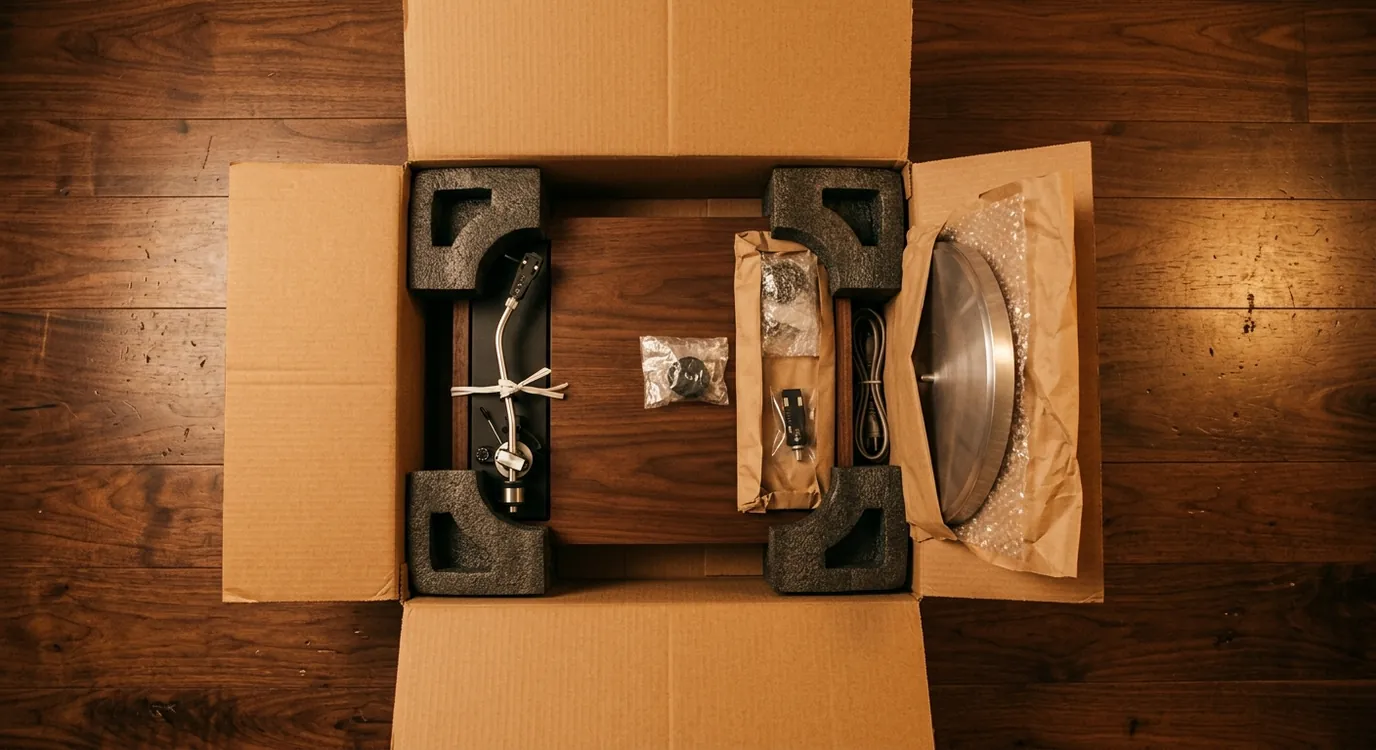
Compare what is in the box with the listing, which you should have saved as a screenshot. Then photograph the deck as you found it, before moving anything. The photo list below is the evidence that matters most:
| Photograph | Why it matters |
|---|---|
| The deck in its packing | Shows how well it was protected and where any damage began |
| Tonearm, counterweight and headshell | Bends, a missing counterweight or a cracked headshell |
| Platter, mat and belt area | Cracks, missing parts, a snapped or sticky belt |
| Dust cover and hinges | Cracks and broken hinges are common and often missing from photos |
| Back panel, cords and plug | Frayed cords or a plug that does not match your supply |
| Any shipping lock or transit screw | Many decks have one that must be released before use, per the manual |
Minutes 25 to 40: checks by hand, with the power off
Before you plug anything in, check what can be checked by hand. Read the manual (a quick online search for the model name usually finds one) and fit the platter, counterweight and belt as it describes.
- Does the platter turn freely and without a grinding or scraping feel?
- Does the tonearm move smoothly in both directions and lift and lower cleanly?
- Is the stylus present, straight and clean? Assume a used one is near the end of its life, as our stylus guide explains.
- On a belt-drive deck, is the belt intact, not cracked, stretched or sticky? See belt drive vs direct drive for why belts wear.
If a part is missing or broken, stop here, photograph it and message the seller.
Minutes 40 to 55: power and play
Look at the cord and plug first. Do not plug in a deck with damaged insulation, an unfamiliar plug or a voltage label that does not match your supply. Imported and older decks can be set up for a different supply, and the right answer comes from the maker's manual and a qualified technician. Never open the case to investigate.
When it is safe to power up, play a record you do not treasure and listen for:
- Speed. Does the pitch sound steady, with no drifting or wow?
- Both channels. Does sound come from both speakers?
- Noise. A steady hum, rumble or buzz is a clue, but it can also be a ground or cable issue.
- Tracking. Does the stylus stay in the groove, or skip?
Record a short clip, with sound, of anything wrong. If the deck has a phono input problem, check the connection and the hookup before blaming the deck. The phono preamp guide helps with that.
Minutes 55 to 60: keep, ask or open a request
Now decide. If everything works as listed, keep the evidence for a week or two and enjoy the deck. If something is off but fixable, message the seller with photos and a short video. If the deck does not match the listing or arrived broken, damaged or faulty, open a request through eBay promptly. On eBay's return guidance, the seller then has 3 business days to respond, and for items not as described the seller pays for return shipping. Only open a request through eBay itself. Payment made outside eBay is not covered.
Not every problem is a claim. A worn stylus is expected on an older deck, and a mild setup issue may just need adjustment. Compare what you see with what the listing promised. The post on decoding eBay turntable listings helps with that comparison.
Need a replacement part?Search stylus and belt listings on eBay, and add your exact deck or cartridge model.eBay affiliate link
Search eBaySources and verification
eBay policy points were read on eBay's own help pages in October 2026. Seller return terms vary, so read the listing, and check your own manual for shipping locks, supply and assembly.
- eBay: Money Back Guarantee policy (30-day window, 3-day exception, payment outside eBay)
- eBay: Buyer protection and damaged items (accept a damaged delivery and report it; seller responds within 3 business days)
- eBay: Returning an item (seller pays return shipping for not-as-described, faulty or damaged items; refund timing)
Voltage, plug and electrical safety questions are left to the maker's manual and a qualified technician.